
Đỉa Tinh by RomeDome.
“ Days of heavy rain flooded the valley floor and filled trenches with mud and water; the battlefield … began to resemble something from the Somme or Passchendaele.”
— J. Llewellyn et al, “Dien Bien Phu”
“At Dien Bien Phu, the enemy did not come out of the jungle. They came through the earth.”
— Vornamen “Vor” Schäfer / former Waffen-SS / FFL 31st special partisan-jaeger commando / Dien Bien Phu 1954
BEFORE
Before the wars, before the airstrip, bunkers, and named strongpoints, there was a shallow black pool beneath the valley’s rice paddies. Older villagers said no one drew water from it after dusk.
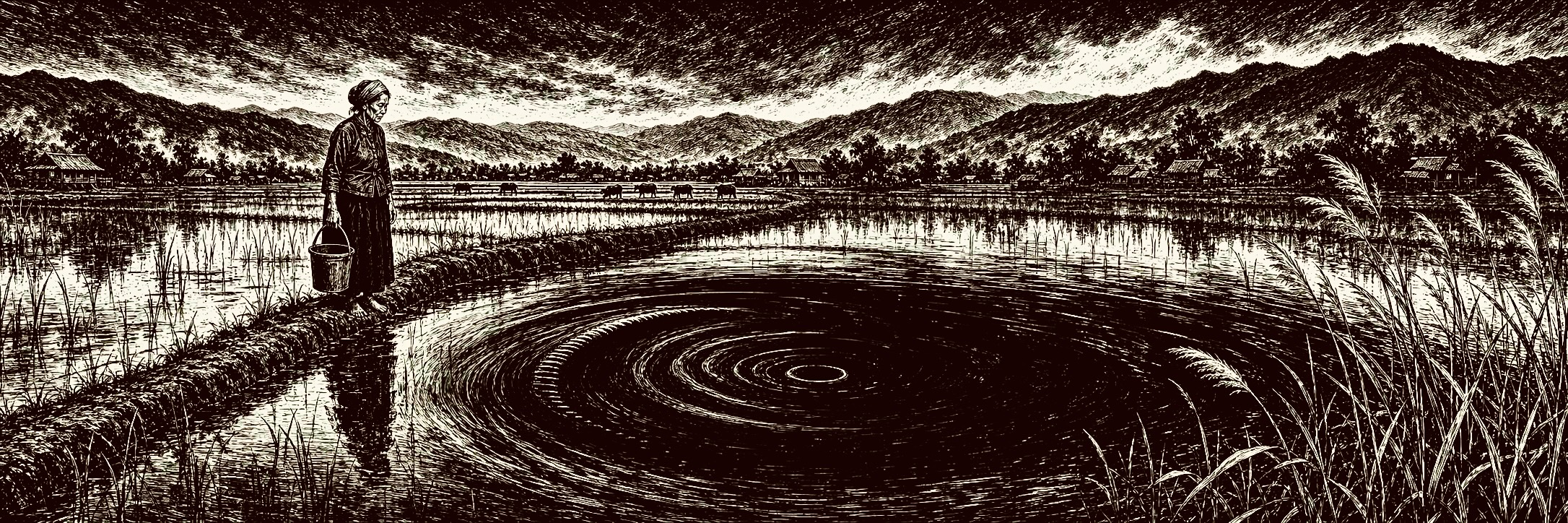
The lost story was not that a leech lived in the pool.
The story forgotten was that the pool had become a leech. It had become Đỉa Tinh.
It had fed on buffalo, deer, dogs, lost children, warriors, and drowned men for generations. Blood did not merely sustain it; blood gave it names. The more names it gathered, the more precisely it could call a person from the reeds.
AFTER
After the siege of Dien Bien Phu began, artillery transformed the irrigation channels and crater fields into one continuous flooded system. Đỉa Tinh spread into every trench through the water, unnoticed beneath boots and sandbags.
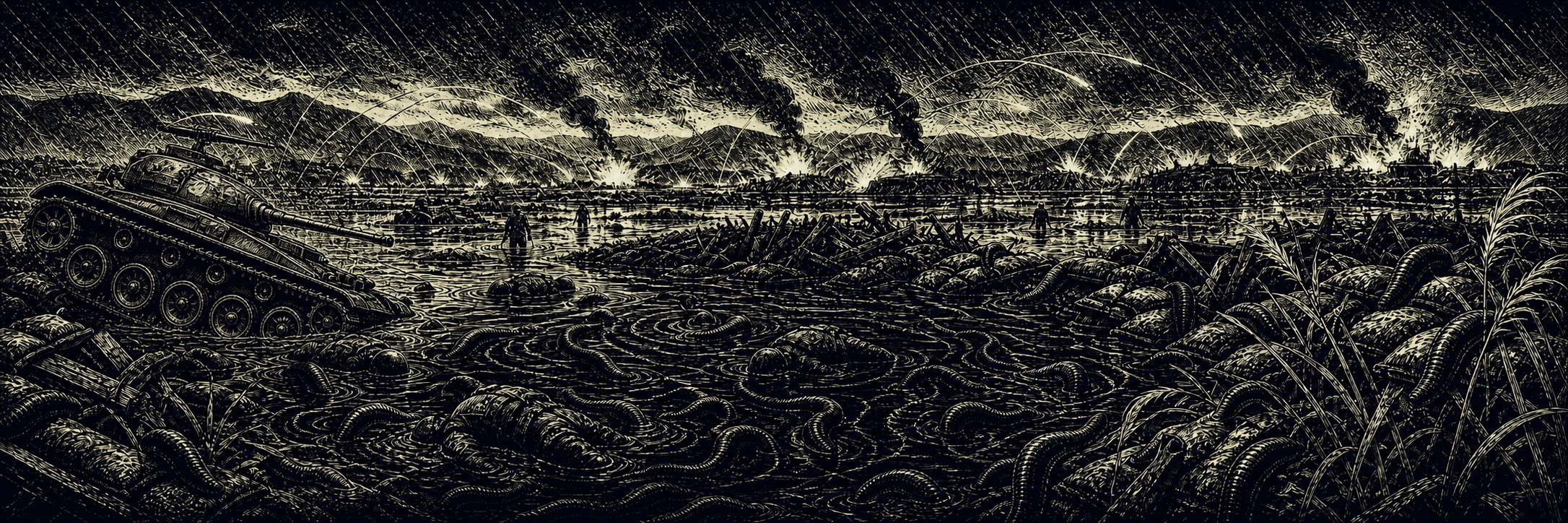
For the soldiers, French, Tai, Moroccan, Vietnamese, German, it began as something nearly unnoticeable: a leech in a flooded trench, beneath a waterlogged sandbag, in a rice paddy, or attached to the ankle of someone wounded. It does not kill through brute force. It learns people by feeding on them.
Each blood meal gives it a fragment of memory, a voice, accent, or private phrase, a person’s fear or longing, the ability to imitate a familiar call from the dark.
By the end, the entity that became Đỉa Tinh lived in the battleground’s soil itself, connected by an old drowned root system, underground seepage channels, and flooded trenches. Men saw, no, felt leeches wherever they trod on wet muddy earth.
But in the beginning, Đỉa Tinh appeared as a dark wet cord on a boot heel, a round red bite beneath a sock, even heard as a voice muffled through water beneath the moldy floorboards. It did not choose sides, race, or gender. It chose fear, loneliness, despair, the pooling of blood on the soil, the cries of the dying.
The Lost Patrol
A French reconnaissance party disappears in the foothills. One man returns alive, unable to remember the route home. He has no visible wounds except a small circular mark behind his ear. Soon afterward, the bunker radio begins receiving transmissions in the voices of men officially listed as missing.
The mystery becomes: Are the missing men alive underground—or is something using their memories to lure rescuers into flooded trenches?
The Underground Field Hospital
A Viet Minh medic notices that some wounded recover from shock far too quickly, becoming calm and strangely lucid. They remember childhood scenes with impossible clarity. Then they begin asking to be taken “back to the water.”
He can’t decide whether the afflicted are contagious, possessed, dying, or being transformed into something else.
The Warning
A Tai interpreter from the village warns that French trench lines have unknowingly copied the pattern of old water channels surrounding a forbidden pool. The military map shows defensive positions; a far older map shows the creature’s circulatory system. He warns if the battle continues, further artillery attacks will break the dikes and fill the trenches, and tries to explain the French’s defensive network will become the thing’s body.
An outcome the Tai can’t explain in a way the French can understand.
THE END
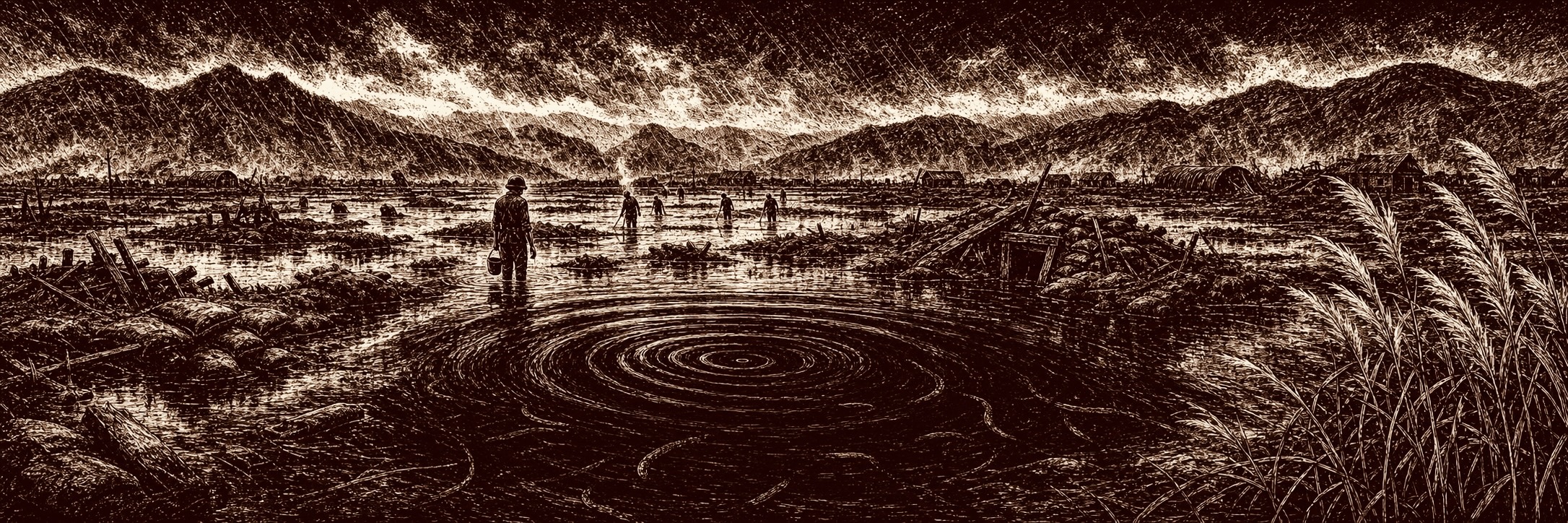
When the rain finally stops, and the long fight surrendered, the survivors discover the trenches have drained.
The leeches are gone.
But every radio in the valley was still receiving a low wet breathing sound—followed by a roll call of the dead in the language of any person that was listening to it.
TODAY
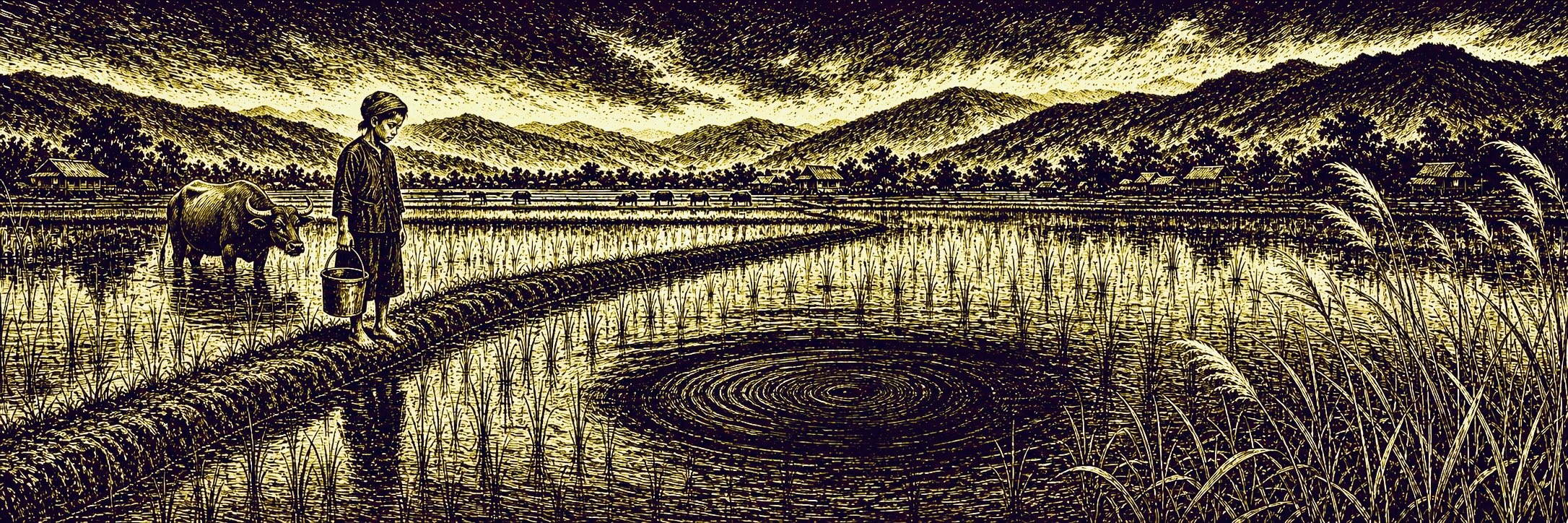
Dien Bien Phu is placid and the echoes of battle are long and far gone. There are no trenches, just a shallow black pool near the valley’s rice paddies.
That no one draws water from after dusk.
Lost in memory now, waiting.
Waiting for war.
For war is a feast.
A feast for things forgotten beneath the earth.
*
About the Author : RomeDome has speeches for leeches.
About the Artist : Romeo Esparrago loves the taste of gummy worms in the morning. It tastes … like … victory.


